At the International American School of Warsaw (IAS), a child joins Grade 1 if they are six on 1 September of the school year they start. Lessons are in English. Grade 1 is taught at our Dembego 12 building in Ursynów, five minutes' walk from Metro Kabaty and beside the Kabaty Forest. Applications for September 2027 are open now, and children join during the year too, whenever their class has a place, so a family that moves to Warsaw in the spring does not have to wait for September.
Talk to admissions, or start an application.
Six or seven: how IAS counts age
IAS follows the American system. The grade depends on your child's age on 1 September, and Grade 1 is for children who are six on that day. The same rule applies to a child who starts in February, halfway through the year.
Polish schools count by year of birth instead, and a child starts klasa 1 in the September of the calendar year in which they turn seven, so a child born between January and August is often one grade ahead at IAS.
Two examples for September 2027. A girl born in March 2021 is six on 1 September 2027 and would start Grade 1 at IAS that month, while a Polish school would expect her in klasa 1 a year later. A boy born in October 2020 is also six on that day and also joins Grade 1. He turns seven in 2027, so for him the two systems agree.
Is your child's birthday close to 1 September? A child near the line can do well in either grade, and admissions will advise which one suits them. Our grade calculator shows the IAS grade and the Polish klasa from a date of birth. Nothing you type leaves the page.
What Grade 1 looks like
Grades 1 to 5 learn at Dembego 12, the smaller of our two buildings. Children keep their own homeroom. Teachers come to them.
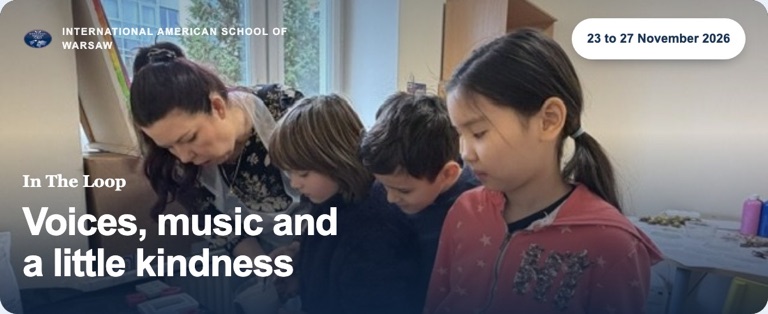
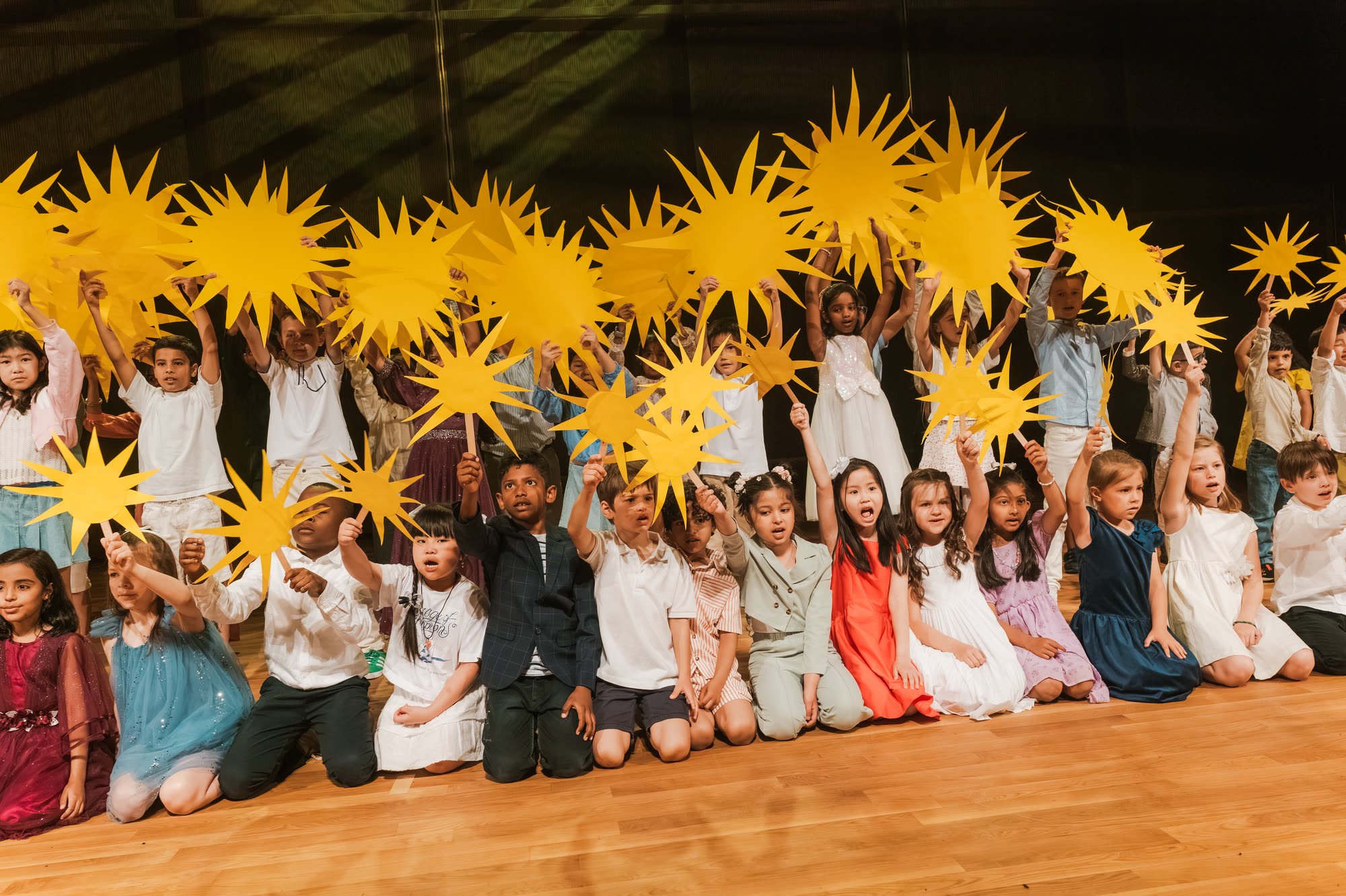
In Grade 1 one class teacher takes most lessons, and four mornings a week begin with Circle Time, when the class sits together for music, stories and talk. Children study English, mathematics, science and social studies, which covers history and geography, and much of the work is done with their hands. Music, art and physical education are on the timetable every week, along with tennis and one double swimming lesson. ICT joins in Grade 2.
Every homeroom goes on at least two integration trips a year.
Across the school there are seven students for every teacher. They come from more than 40 nationalities, and most of them learn in a second or third language.
A school day, 07:45 to 17:00
The building opens at 07:45, the first lesson starts at 08:30, and between 08:30 and the end of lessons at 15:10 a child has seven lessons of about 45 minutes, a twenty-minute break in the morning and lunch around midday.
Every pupil from Kindergarten to Grade 8 eats lunch at school, either a meal from our caterer, Kuchnia z Klasą, or food from home, and parents order, pay for and cancel meals day by day in the iKuchnia panel. No pork. Meat and vegetarian dishes are served every day.
Clubs run every day after 15:10. After-school care continues until 17:00 in the same building, so on a full working day a child can arrive before eight and be collected at five.
Polish in Grade 1
IAS is an American school and also a Polish non-public school, and in the educational agreement each family signs, the school commits to teaching programmes that include the Polish core curriculum (podstawa programowa) at each level.
Polish is on the timetable four or five times a week. Polish Language and Literature is followed by Polish nationals and by children with two or more years of Polish schooling, while a child who arrives without Polish learns it as a second language.
Could your child move to a Polish school one day? Say so in your first conversation with admissions, and ask what it means for their year.
If your child speaks little English
They can still apply. In the lower grades IAS accepts children with little or no English.
Our EAL teachers (English as an Additional Language) work with children who are still building their English, with support that depends on each child's level, and EAL is a paid programme on top of tuition that children in Grades 2 to 5 can join. Grade 1? Ask admissions.
After Grade 1
Children stay at Dembego 12 until the end of Grade 5, then move a short way along the same street to Dembego 18 for Grade 6. IAS was founded in 1989 and teaches from Pre-KG to Grade 12, so a family that starts in Grade 1 does not have to look for a new school at eleven, or at fifteen. At the end, students choose between the IB Diploma, which IAS has taught since 2006, the American High School Diploma and the Polish Matura.
Curious what Elementary lessons look like? This autumn Grades 3 and 4 built boats and tested how many marbles they could carry. The whole stage is described on our Elementary School page.
How to apply for Grade 1
- Write to [email protected] or call +48 22 649 14 40, Monday to Friday, 08:00 to 16:00, and tell us your child's date of birth, where they are now (a kindergarten, a zerówka or a school), the languages they speak and when you would like them to start.
- Fill in the online application. Each child needs their own, and brothers and sisters can be added to the same form.
- Send school records and a recommendation from a head or a teacher. The form asks for records from the last two years; if your child has only been to kindergarten, ask admissions what to send.
- Sign the educational agreement. Admissions reviews the application and contacts you with a decision.
- Pay the enrolment fee, which secures the place. The fee is never refunded. If the class is full, ask about the waiting list before you pay anything.
Tuition depends on the grade. Families pay it in 10 monthly instalments, with nothing due in July or August, while meals, the school bus and trips are paid separately. The full table and a calculator are on the fees page, and our guide to starting at IAS in September 2027 covers when to apply.
Five questions for any school
- Which grade will my child join, and how do you count age?
- How many Polish lessons are there each week, and on what programme?
- Who teaches most of the lessons in the first year?
- What happens after lessons end, and until what time can my child stay?
- What help is there for a child still learning English, and does it cost extra?
Ask them here too. Admissions answers within one working day.