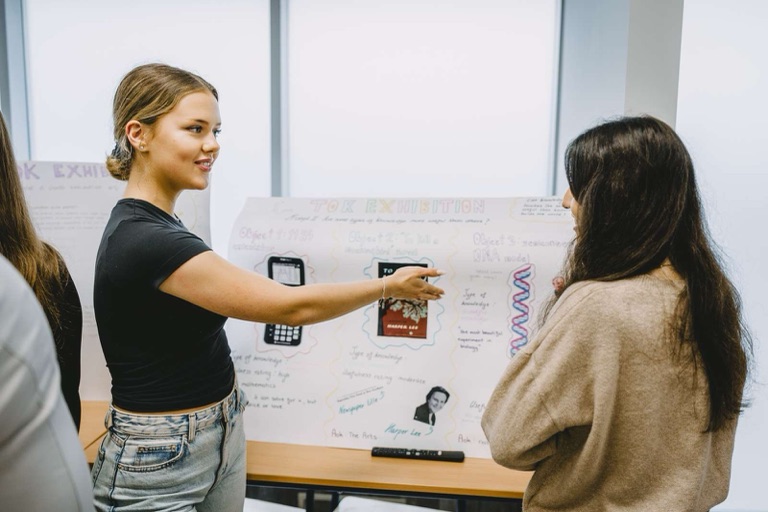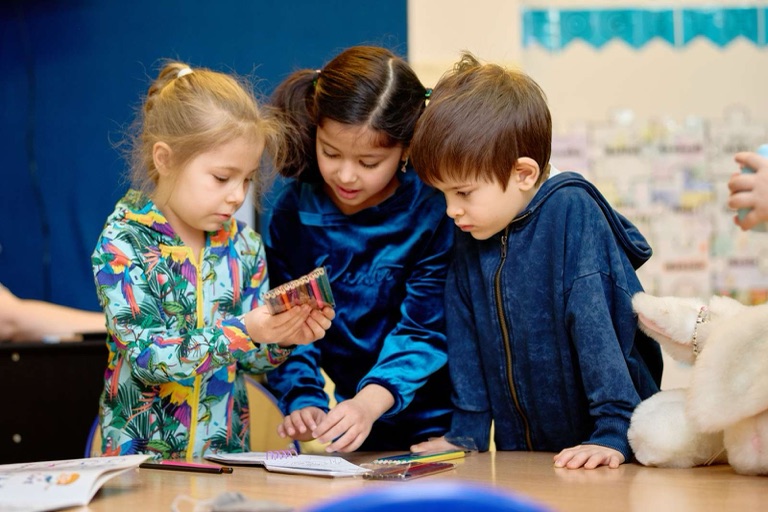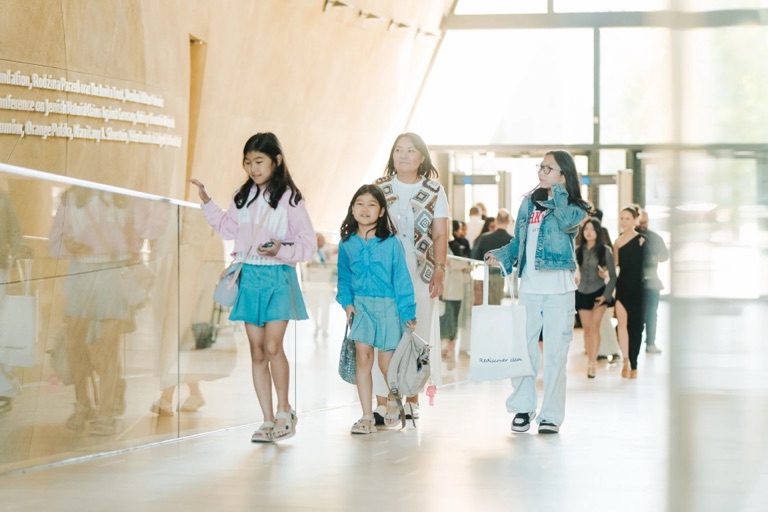
The International American School of Warsaw (IAS) runs an international primary school taught in English, at Dembego 12 in Ursynów, five minutes' walk from Metro Kabaty, for children from Kindergarten to Grade 5. It suits expat families, families who may move country again, and Polish families who want school in English, and a child can start with very little English.
IAS was founded in 1989. It teaches all the way to Grade 12, so nobody has to find a new school at eleven.
Talk to our admissions team about your child, or start an application.
Dembego 12, the building for younger children
Kindergarten and Grades 1 to 5 share this building, the smaller of our two, beside the Kabaty Forest, so moving up to Grade 1 means a new classroom in a place the child already knows. In Elementary School, ages 6 to 11, teachers come to the homeroom.
The doors open at 07:45. After-school care keeps the building open until 17:00, so a parent with a full working day can drop off before eight and collect at five.
Across the school there are seven students to every teacher, from more than 40 nationalities.
English all day
English is the language of instruction in every subject and every year group, and the school's 40 qualified educators come from around the world, most of them native English speakers.
Searching for an "English primary school"? One thing needs saying. IAS is American. We do not teach the British curriculum. Mathematics, science, social studies and English follow an American curriculum that runs from Kindergarten to Grade 12, and the Polish programme sits alongside it.
For a younger child, our guide to choosing an English kindergarten in Warsaw lists ten questions to ask any kindergarten, with our answers.
What a child's day looks like
Lessons run from 08:30 to 15:10, Monday to Friday, in seven periods of about 45 minutes, with a twenty-minute break in the morning and a lunch break around midday.
Grade 1 starts four mornings a week with Circle Time, the class meeting of music, stories and talk. In Grades 1 to 3 one class teacher takes most of the week, and from Grade 4 mathematics, English and science appear on the timetable as separate subjects, while music, art, physical education and, from Grade 2, ICT fill the rest. Polish comes four or five times a week. Every class swims.
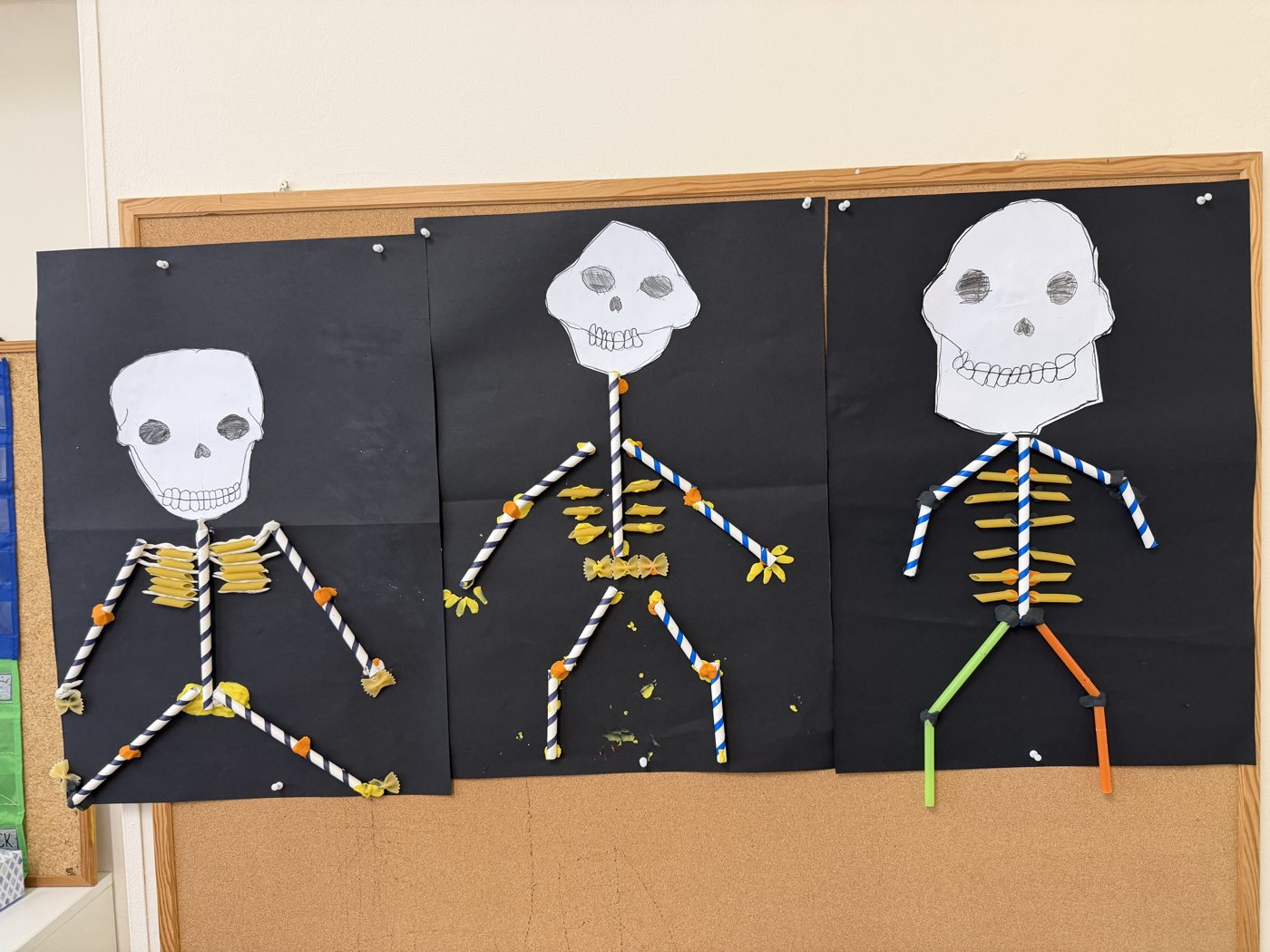
Much of the work is done with the hands. This autumn Grade 3 built skeletons from straws, pasta, paper and play dough, then made model arms from cardboard and elastic bands and found out why muscles work in pairs: they can pull, but they cannot push.
Lunch is at school. Every child from Kindergarten to Grade 8 eats here, either a meal from our caterer, Kuchnia z Klasą, or food from home, and families order and pay for meals day by day in the iKuchnia panel. There is no pork.
Clubs run every day after 15:10. This year Grades 1 to 5 have Art Club, tabletop games, Film Club and football, which stops for the winter and comes back in March. From Grade 3 there is also the STEAM club, where children have built balloon rockets and set out four slices of bread to see where mould grows fastest. On Wednesdays, children from Grades 1 to 5 join older students at Dembego 18 for Games Club.
If your child has little English
They can still start. IAS accepts children with little or no English in the lower grades, and most students here are working in a second or third language.
The EAL team (English as an Additional Language) assesses each child's English. A child still building it joins a group at their own CEFR level, inside the normal timetable, and how much support they get depends on that level, with B2 as the target: the level at which a student can take the whole curriculum without support. EAL teachers also work with subject teachers, so the science teacher knows what this child can and cannot yet read. Early on, a child gets written feedback, not a grade.
EAL is paid, per term, on top of tuition. In Grades 2 to 5 a child still learning English can join it, and the amounts are on the fees page. Starting in Grade 1? Ask admissions how support works in that grade. The EAL page has the detail.
Joining in the middle of the year
Yes, if your child's grade has a place. IAS takes applications all through the year, and Term 2 begins in February 2027. Places are limited and most classes this year are full, so start by telling admissions your child's current grade and the date you expect to arrive, which you can do from abroad, before you have a Polish address or a fixed moving date.
The grade follows your child's age on 1 September, even for a February start, and admissions also looks at language, previous schooling and any additional needs, so a child from another system is not automatically put back a year. Send reports in whatever language you have them. Tuition is calculated from the time of enrolment. If EAL starts later in the year, you pay for the lessons held.
Class already full? Ask about the waiting list before you pay anything, because the enrolment fee is never refunded.
After Grade 5
Grade 6 means a move along the street to Dembego 18, our main building, which holds Grades 6 to 12, where each subject has a specialist teacher and students use the ICT lab, the art centre and the science laboratory. Middle School, Grades 6 to 8, is an IB Middle Years Programme candidate school, which is a stage in the IB's authorisation process.
High School ends with three diploma routes: the IB Diploma, taught at IAS since 2006, the American High School Diploma and the Polish Matura. Students who graduate with the IB or the Matura also receive the American diploma, and a student can earn all three only by completing each programme's requirements. In the May 2026 session the average IB diploma score at IAS was 34, against about 30.6 worldwide.
The Polish curriculum question
Polish families ask this early. IAS teaches an American curriculum in English, and it is also a Polish non-public school: in Polish law, an eight-year primary school followed by a four-year liceum. The educational agreement each family signs commits the school to teaching programmes that include the Polish core curriculum (podstawa programowa) at each level.
On the timetable that means Polish four or five times a week from Grade 1, plus one history lesson a week from the Polish programme in Grades 4 and 5. Polish Language and Literature is for Polish nationals and for children with two or more years of Polish schooling. From Grade 3, children new to Polish have their own group.
Two things to raise at your first conversation. IAS places children by age on 1 September and Polish schools by year of birth, so the Polish klasa can be one lower than the IAS grade. And if your child may move to a Polish school later, or you want to know how the Grade 8 exam (egzamin ósmoklasisty) would work for your family, ask admissions directly for your child's year.
How to start
- Write to [email protected] or call +48 22 649 14 40, Monday to Friday, 08:00 to 16:00, and tell us your child's age, current grade, level of English and hoped-for start date.
- Fill in the online application. One application per child; brothers and sisters go on the same form.
- Send school reports from the last two years and a recommendation letter from a principal or teacher. After reading the reports, the school decides whether an entrance assessment is needed, most often in English, mathematics or both.
- Admissions contacts you with a decision. Paying the enrolment fee holds the place.
The fees page lists tuition per year for each grade, the enrolment fee and the discounts. Meals, the school bus, EAL and school trips are paid separately, and families arrange the bus directly with its operator, Little Monsters.
Would you like to see Dembego 12 first? Visits are by appointment, so ask admissions. Still comparing schools? Our guide to how international schools in Warsaw differ puts the curricula side by side.